Teaching emotional intelligence: Help kids manage feelings

My four year old daughter was on the floor screaming because her toast broke in half. Not because she was hungry or hurt but because the toast was broken and in her mind that was the end of the world.
Old me would have said “you’re fine, it’s just toast, stop overreacting”. New me sat down next to her and said “you’re really upset that your toast broke. You wanted it whole That’s frustrating”.
She stopped mid-scream, looked at me and nodded, Then she took a shaky breath and ate the broken toast. No lecture, no timeout, no battle. Just acknowledgment of her feeling.
That’s emotional intelligence in action. It’s not about preventing feelings or making them go away. It’s about helping kids understand what they’re feeling and giving them tools to handle it.
Why emotional skills matter more than we think
I used to think emotions were something to control or suppress. Big feelings meant bad behavior and my job was to stop both. I was so wrong.
Research shows that kids with strong emotional intelligence do better in school, have healthier relationships and handle stress more effectively. They’re less likely to act out because they have other ways to deal with uncomfortable feelings.
Think about adults you know who fall apart at the smallest inconvenience or explode in anger over minor frustrations. Nobody taught them how to handle their emotions as kids so they never learned. They’re still having four-year-old meltdowns in forty-year-old bodies.
Your child’s emotional development is just as important as their physical or intellectual development. Maybe more important because emotional skills affect literally everything else they do
When kids learn to recognize and manage their feelings they don’t need to hit, scream or destroy things to express themselves.They have better options. But those options have to be taught just like reading or riding abike.
Building a feelings vocabulary
Most kids only know three emotions: happy, sad and mad. That’s like trying to paint a picture with only three colors. You need more words to describe the full range of human experience.
I started labeling my own feelings out loud. “I’m feeling frustrated right now because the grocery store was so crowded”. “I’m disappointed that our plans got cancelled”. “I’m nervous about this work presentation”.
This does two things. It normalizes having feelings and it teaches the words to describe them. My kids started picking up the vocabulary naturally just from hearing me use it.
We also read books about feelings. There are amazing picture books that show different emotions and what they look like on faces and in bodies,My toddler learned to identify jealousy and embarrassment from stories before she could experience them herself.
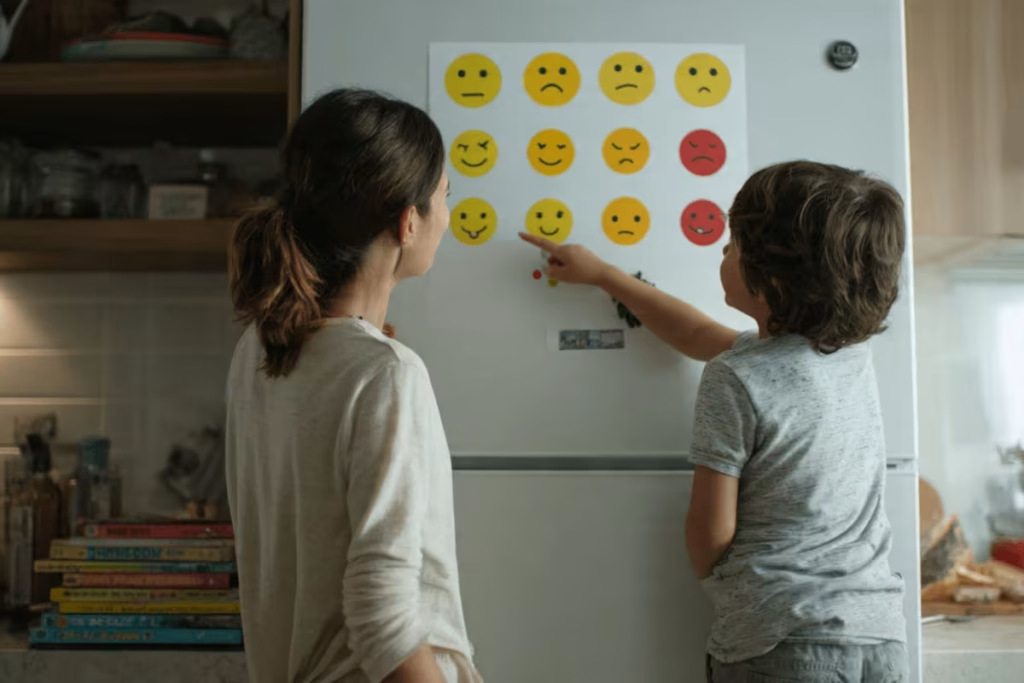
I print emotion charts and stick them on the fridge. When someone is upset we can point to the face that matches how they feel. This works especially well for kids who can’t verbalize yet or who shut down when overwhelmed.
The more specific the vocabulary the better. “Disappointed” is different from “sad”. “Overwhelmed” is different from “angry”. “Anxious” is different from “scared”. Teaching these distinctions helps kids understand themselves better.
What feelings feel like in the body
Emotions aren’t just in your head. They show up physically and kids need to learn what that feels like.
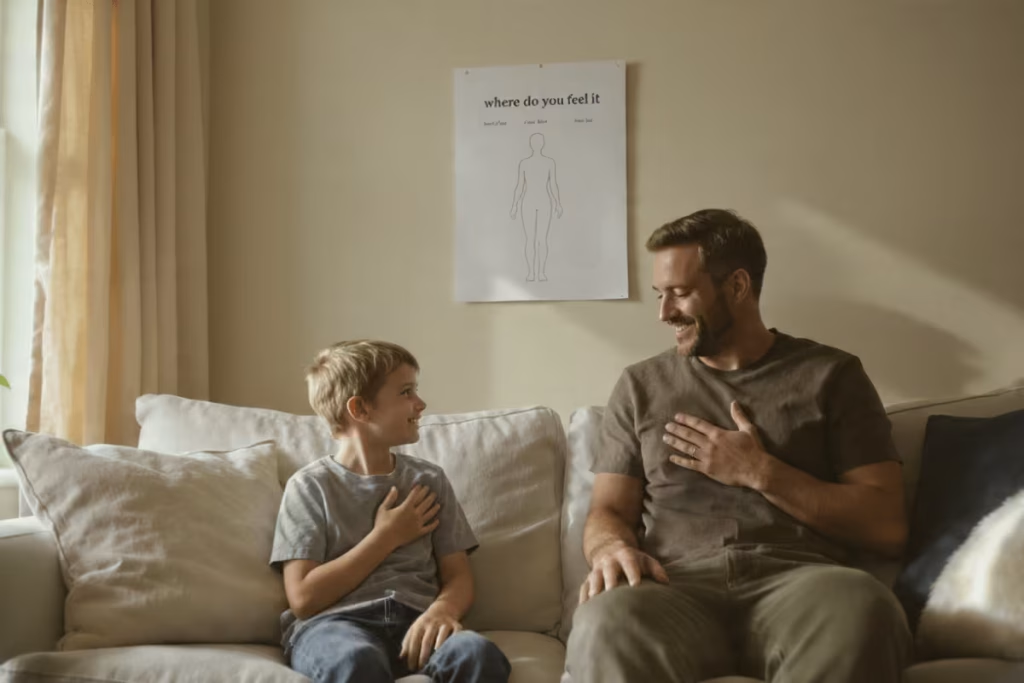
I teach my kids to notice body signals. “Where do you feel that anger? Does your chest feel tight? Are your hands in fists? Is your face hot?” This body awareness helps them catch feelings early before they explode.
When my son gets anxious his stomach hurts. Once he made the connection between the physical sensation and the emotion he could tell me “my tummy feels worried” instead of just saying he didn’t want to go to school.
We practice together. I’ll say “when I’m angry my shoulders get tense and my jaw clenches. What happens in your body when you’re angry?” This kind of conversation usually happens during calm times not during meltdowns.
For younger kids I make it playful. We act out different emotions and notice what our bodies do. Big scared eyes. Slumped sad shoulders. Tight angry muscles. This makes the abstract concept of feelings more concrete .
Teaching kids to tune into their bodies gives them an early warning system. They can learn to notice “I’m starting to feel frustrated” before it becomes “I’m throwing toys across the room”.
The calm down toolkit

Every child needs strategies for handling big feelings. Not one strategy but several because different situations call for different tools.
Deep breathing works but you have to teach it when they’re calm not when they’re mid-tantrum. We practice “smell the flower, blow out the candle” breathing during bedtime. When my daughter gets upset I can remind her and she already knows what to do.
Some kids need to move their bodies. My son runs laps around the yard or does jumping jacks when he’s angry. Physical activity burns off the stress hormones flooding his system. Fighting that need makes everything worse.
Other kids need quiet and alone time. We created a cozy corner with pillows and soft lighting where anyone can go to reset. It’s not a punishment spot. It’s a safe space to feel feelings without an audience.
Sensory tools help too. Stress balls, fidget toys, soft blankets, music. My daughter squeezes playdough when she’s anxious. My son listens to calm music. Figure out what works for your individual child through trial and error.
The key is teaching these tools ahead of time. You can’t hand a drowning person swimming lessons. Practice the strategies during peaceful moments so they’re available during hard moments.
Emotion coaching in real time
When your child has big feelings your response matters more than you realize. This is where most of us default to fixing, dismissing or punishing the emotion.
The emotion coaching framework changed everything for me. First you notice the feeling and name it. “You seem really angry right now”. Second you validate it without judgment. “It makes sense that you’re angry. Your brother knocked down your tower”.
Third you help them calm down using whatever strategy works for them. Fourth once they’re calm you problem solve together if needed. “What can we do so this doesn’t happen again?”
This process respects the feeling while still addressing behavior. My son can be angry that I said no to more screen time. That’s valid. He cannot throw the remote. That’s not acceptable. We separate the feeling from the action.
I mess this up regularly. My instinct is still to say “you’re okay” or “calm down” when my kids are upset. Those phrases shut down communication. I’m learning to pause and remind myself that their feelings aren’t an emergency I need to fix.
Sometimes kids just need to cry or be angry for a while. Sitting with them through that discomfort without trying to make it stop teaches them that feelings pass and that you can handle whatever they’re going through.
Handling meltdowns and tantrums
Full meltdowns are different from regular upset feelings. When a child is in complete emotional overload the logical part of their brain is offline. You can’t reason with them or teach them anything in that moment.
Your only job during a meltdown is safety and presence. Keep them safe, keep others safe and stay nearby. My calm presence helps my kids regulate when they can’t do it themselves.
I don’t talk much during peak meltdown. Maybe a soft “I’m here” or “you’re safe”. Lots of words just add to the overwhelm. I sit close enough that they know I’m there but not so close that I’m crowding them.
After the storm passes we reconnect. A hug, a drink of water, maybe a quiet activity together. Once they’re fully calm we might talk about what happened but not immediately. Their nervous system needs time to reset first.
For tantrums which are more about frustration and wanting something the approach is slightly different. I stay calm, hold the boundary and wait it out. “I hear that you really want candy. We’re not buying candy today. You can be upset about that”.
The tantrum usually gets worse before it gets better because they’re testing whether the meltdown will change your mind. If you stay consistent they learn that tantrums don’t work and they fade over time.
Modeling emotional regulation yourself
Kids learn more from watching you than from anything you say. If you yell when frustrated they learn that’s how to handle frustration. If you storm off when angry they learn to do the same.
I’m not perfect at this. I lose my patience and raise my voice sometimes. But I’m getting better at pausing when I feel myself getting triggered. I say out loud “I’m starting to feel frustrated so I need a minute to calm down”.
This teaches them that everyone has big feelings including adults and that there are healthy ways to handle them. When I mess up and yell I apologize and talk about what I should have done differently.
My kids have watched me take deep breaths before responding to something stressful. They’ve seen me step away to collect myself. They’ve heard me say “I’m disappointed but I’ll be okay”. These moments are teaching emotional intelligence more than any lecture could.
The goal isn’t to hide your emotions from your kids. It’s to show them healthy ways to experience and express emotions. Let them see you feel things and work through them appropriately.
Making peace with all the feelings
The hardest part of teaching emotional intelligence is accepting that your child will have negative feelings sometimes and that’s okay. You can’t and shouldn’t try to keep them happy all the time.
Disappointment teaches resilience. Frustration teaches perseverance. Sadness teaches empathy. Anger teaches boundaries. Your child needs to experience the full emotional spectrum to develop into a well-adjusted adult.
My job isn’t to prevent my kids from ever feeling bad. It’s to teach them that they can survive feeling bad and come out okay on the other side. That’s a crucial life skill.
When you combine emotional intelligence with clear boundaries and open communication you create an environment where kids can be their authentic selves while still learning to function in the world. That’s the sweet spot of parenting.
For more on setting those boundaries while honoring feelings read our guide on setting boundaries and natural consequences. You’ll see how these pieces fit together to create a complete approach.