Positive communication techniques for better parent-child bonds
My son was six when he looked up at me during another lecture about his messy room and said “mom you never listen to me”. That stopped me cold. I was always talking at him but rarely with him.
That moment changed how I communicate with my kids. I realized the way we talk to our children shapes not just their behavior but their entire sense of self worth and their willingness to open up to us.
Communication isn’t just about getting kids to listen. It’s about building a relationship strong enough to weather the tough years ahead. The patterns you set now determine whether your teenager will come to you with problems or hide them.
Why traditional parent talk fails
Most of us parent the way we were parented. We give commands, issue warnings and lecture when things go wrong. We mean well but this approach pushes kids away instead of bringing them closer.
Think about how you feel when someone talks down to you at work or tells you what to do without asking your input. Kids feel the same way. They might comply out of fear or obligation but they don’t actually want to cooperate .
I used to say things like “because I said so” and “stop crying right now” and “you’re being ridiculous”. Every single one of those phrases damaged my relationship with my kids a little bit. They learned that their feelings didn’t matter and that I wasn’t safe to talk to about hard things.
The goal isn’t perfect obedience. The goal is raising humans who can think for themselves, express their needs clearly and maintain healthy relationships. That starts with how we communicate at home.
Getting down to their level literally
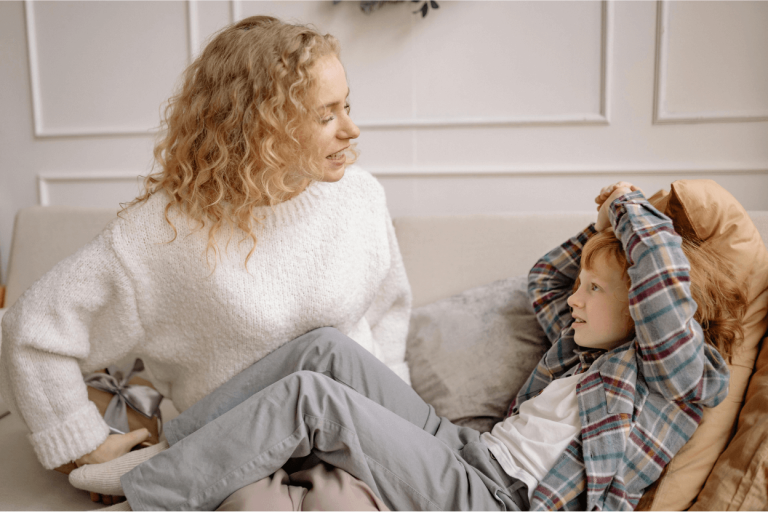
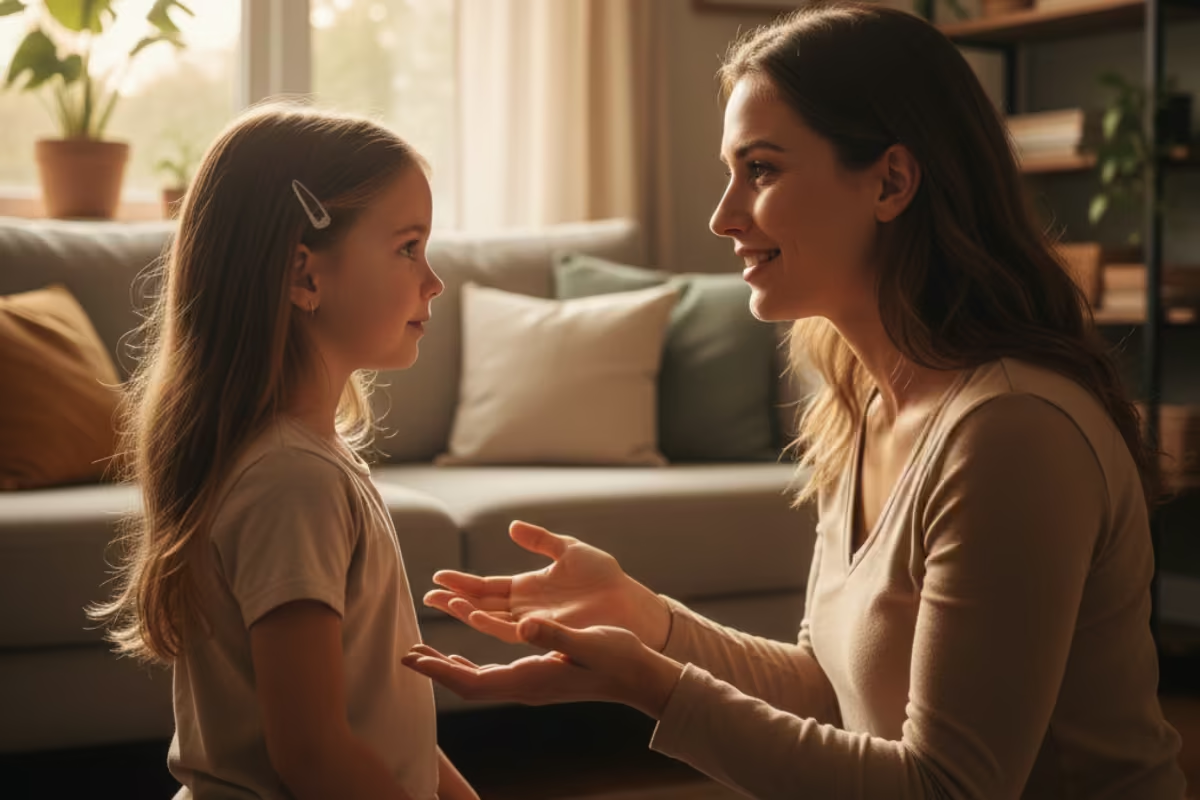
One simple shift transformed my conversations with my kids. I started physically lowering myself to their eye level when we talk about something important.
Kneeling down or sitting on the floor removes the power dynamic that comes from towering over a small person. It signals that you’re truly present and interested in what they have to say. My kids respond completely differently when I’m at their level versus standing over them.
This works for toddlers who can’t articulate much yet all the way through elementary years. Even my ten-year-old appreciates when I sit beside her instead of standing with my arms crossed.
Body language matters as much as words. Uncross your arms. Soften your face. Make your body language say “I’m here for you” not “I’m about to correct you”.
The power of active listening

Active listening sounds obvious but most parents don’t actually do it. We hear our kids but we don’t really listen because we’re already planning what to say next.
When your child talks to you stop what you’re doing. Put down your phone. Turn off the stove. Look at them and focus completely on what they’re saying. This alone will shock them if you haven’t been doing it.
Reflect back what you hear. If your daughter says “nobody played with me at recess” don’t immediately jump to “well did you ask someone” or “I’m sure that’s not true”. Instead say “it sounds like you felt really lonely today”.
This validation doesn’t mean you agree with everything they say. It means you acknowledge their experience as real and important. Kids who feel heard are much more willing to problem solve with you.
Ask open-ended questions instead of yes or no questions. “What was the hard part about that” gets you more information than “was it hard”. “Tell me more about what happened” invites them to share instead of shutting down.
My kids tell me so much more now that I’ve learned to listen without immediately fixing or dismissing their problems. Sometimes they just need to be heard.
Speaking without blame
The words you choose either invite cooperation or create defensiveness. I statements work so much better than you statements when addressing behavior issues.
Compare these approaches. “You never clean up after yourself” versus “I feel frustrated when I see toys all over the floor because I just cleaned”. The first one attacks character. The second one describes impact.
“You’re being so difficult right now” versus “I’m having trouble staying patient because I’ve asked three times”. See the difference? One labels the child. The other expresses your experience without blame.
This doesn’t mean letting bad behavior slide. It means addressing it in a way that preserves dignity and opens the door for change. Kids can’t hear your message when they’re busy defending themselves against attack.
State what you need clearly and directly. “I need you to put your shoes by the door” works better than “why do you always leave your shoes in the middle of the floor”. The first is a request. The second is criticism disguised as a question.
Validating feelings without permission
This confused me at first. How do you validate feelings while still maintaining boundaries? Turns out you can do both at the same time.
When my son throws a fit because I won’t buy him candy I say “I hear that you really wanted that candy and you’re disappointed we’re not getting it. It’s okay to feel sad about that. We’re still not buying candy before dinner”.
I acknowledge his feeling without changing my decision. This teaches him that all feelings are acceptable even when all behaviors aren’t. He learns that disappointment won’t kill him and that I can handle his big emotions without caving.
The phrase “you’re okay” drives me crazy now that I understand feelings better. When a child is upset they are not okay in that moment. Telling them they’re okay invalidates what they’re experiencing.
Try “I’m here with you” or “you’re safe” instead. These phrases provide comfort without denying reality. They tell your child you can handle whatever they’re feeling.
For bigger kids validation sounds like “I get why you’re angry that I said no to the sleepover. That’s disappointing”. You don’t have to change your no. You just have to acknowledge their right to have feelings about it.
Problem solving together
The best conversations happen when you invite your child to find solutions with you instead of imposing your solution on them.
When there’s a recurring issue like morning struggles or homework battles ask “what do you think would help make this easier”. Kids often have creative ideas we wouldn’t think of.
My daughter suggested we pack her lunch the night before to reduce morning stress. My son asked if he could do homework right after school instead of after dinner. Both ideas came from them when I asked instead of told.
Brainstorm together without judgment. Write down every idea even the silly ones. Then evaluate which solutions might actually work. When kids help create the plan they’re way more invested in making it succeed.
This approach aligns with relationship-based parenting methods that prioritize connection over control. You’re teaching problem solving skills while strengthening your bond.
Tone matters more than words
I can say “please pick up your toys” in a tone that sounds like a reasonable request or in a tone dripping with sarcasm and frustration. Same words but completely different message.
Kids are incredibly attuned to tone. They pick up on your annoyance, your disappointment and your anger even when you’re trying to hide it. That’s why “fine” said through gritted teeth doesn’t feel fine to them.
When you’re too frustrated to speak calmly it’s better to take a break. Tell your child “I need a minute to calm down so I can talk to you respectfully”. This models emotional regulation and prevents damage to your relationship.
Practice saying hard things in a neutral tone. Stand in front of a mirror if you need to. Your face and voice should match your words. If you’re saying “I’m not angry” while your jaw is clenched your child won’t believe you.
Repair when you mess up

You will mess up. You’ll yell. You’ll say something harsh. You’ll dismiss their feelings when you’re stressed. That’s being human not being a bad parent.
What matters is what you do next. Apologize sincerely without excuses. “I’m sorry I yelled at you. That wasn’t okay. You deserved better from me” teaches accountability.
Don’t follow your apology with “but you really shouldn’t have”. That cancels out the apology. Own your part fully even if they also need to own theirs. Deal with their behavior separately after you’ve repaired the relationship damage.
My kids have learned to apologize better because they’ve watched me do it. They know relationships can survive conflict when both people are willing to repair.
Making it stick
Start with one technique. Pick the one that feels most doable and practice it until it becomes natural. Then add another.
I started with active listening because it required me to change my behavior without my kids needing to do anything different. Once they noticed I was really hearing them our whole dynamic shifted.
Pay attention to what works with each individual child. My son needs more physical connection during tough conversations. My daughter needs more space. Same principles but different application.
The investment you make now in communication skills pays dividends forever. These aren’t just parenting techniques. They’re relationship skills your kids will use with friends, partners and their own children someday.
For more ways to address specific behavior challenges using these communication principles read our guide on solutions for childhood behavioral problems. You’ll see exactly how to apply these techniques to real situations that come up daily.