Complete parenting guidelines: Building strong foundations through positive discipline

The moment you become a parent someone hands you a tiny human and expects you to know what to do. Nobody gives you a manual. Nobody explains that traditional discipline methods often backfire. Nobody tells you there’s a better way.
I’ve been parenting for almost a decade now and I’m still learning. But one thing changed everything for me. Understanding that discipline isn’t about punishment or control. It’s about teaching, guiding and building a relationship strong enough to weather any storm.
Positive discipline sounds soft to people who haven’t tried it. They imagine permissive parenting where kids run wild with no boundaries. That’s not what this is at all. Positive discipline means firm boundaries with respectful enforcement. Clear expectations with natural consequences. Authority without authoritarianism.
The traditional parenting approach I grew up with relied on fear and shame. Do what I say or else. It got compliance in the moment but damaged relationships long term. Kids learned to avoid getting caught not to make good choices. They learned their feelings didn’t matter and that bigger people could use power to control smaller people.
Research backs up what many of us feel instinctively. Children raised with positive discipline show better emotional regulation, stronger problem-solving skills and healthier relationships. They develop internal motivation instead of depending on external rewards or punishments. They become responsible because they understand why rules matter not because they fear consequences.
This comprehensive guide walks you through everything you need to build a positive discipline foundation in your home. You’ll learn how child development shapes behavior, how to communicate in ways that strengthen connection, how to set boundaries that teach instead of punish and how to handle the daily challenges every parent faces .
Nothing here is theoretical. These are real strategies that work with real kids in real families. Some will feel natural immediately. Others will take practice. Start where you are and build from there.
Understanding child development and age-appropriate expectations
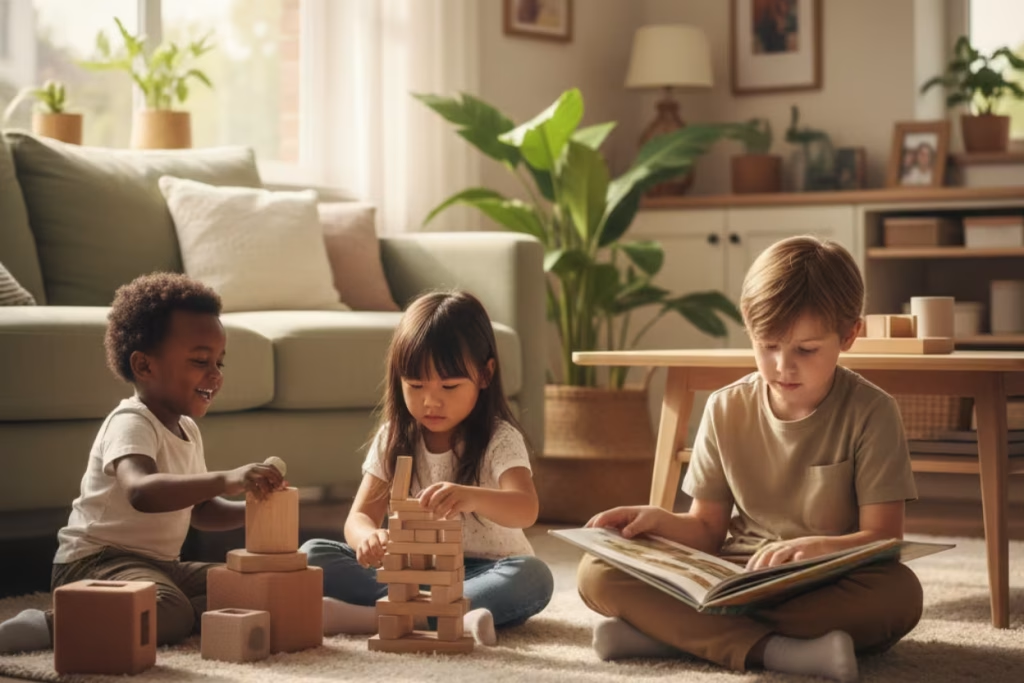
Your three year old isn’t trying to make your life difficult when they melt down over the wrong color cup. Your seven year old isn’t being defiant on purpose when they forget instructions. Your ten year old isn’t lazy when they struggle with homework organization.
Most behavioral problems stem from expecting kids to have abilities their brains haven’t developed yet. When you align your expectations with what’s actually happening in their developing brain everything gets easier.
A toddler’s prefrontal cortex which controls impulse control and emotional regulation is barely online. Asking them to share willingly or wait patiently is like asking them to speak French when they only know three English words. Their brain physically cannot do what you’re asking.
Preschoolers have huge emotions with very little ability to manage them. The emotional center of their brain is fully active while the logical thinking part is still under construction. This explains why they have complete meltdowns over things that seem trivial to adults. Their feelings are genuinely overwhelming because the part of the brain that provides perspective hasn’t kicked in yet.
Elementary age children gain reasoning skills but still struggle with abstract thinking and long-term planning. They can understand rules and consequences but they might not grasp why homework done now prevents problems later. Executive function skills like planning and organization develop slowly throughout childhood and into the twenties.
When you understand these developmental realities you stop taking behaviors personally. Your child isn’t giving you a hard time. They’re having a hard time because their brain isn’t finished growing yet.
This means adjusting what you expect at each age. Toddlers need simple one-step directions and lots of redirection. Preschoolers need movement breaks and choices between acceptable options. School-age kids need help breaking big tasks into smaller steps and visual reminders because their executive function is still developing
Knowing what’s normal at each stage also helps you identify when something might need professional attention. All preschoolers have tantrums but tantrums that increase in frequency or intensity over time might signal something deeper. All school-age kids forget things occasionally but consistent struggles with organization across multiple settings might indicate a need for support.
For a deeper look at developmental stages and what to expect at each age explore our detailed guide on child development and realistic parenting expectations. You’ll find specific milestones and practical ways to match your discipline approach to your child’s actual capabilities.
Communication strategies that build connection

The way you talk to your child matters more than almost anything else you do as a parent. Your words shape their self-image, their willingness to cooperate and whether they’ll come to you with problems as they get older.
Most of us default to the communication style we grew up with. Commands, lectures and criticism when things go wrong. This approach might get short-term compliance but it damages the relationship you’re trying to build.
Effective communication starts with actually listening. Not hearing words while planning your response but truly focusing on what your child is saying. Put down your phone. Stop what you’re doing. Get down to their eye level physically and make eye contact.
Active listening means reflecting back what you hear without immediately jumping to solutions or dismissals. When your daughter says she had a bad day at school resist the urge to say “I’m sure it wasn’t that bad” or immediately problem-solve. Instead try “it sounds like today was really hard for you. Tell me more about what happened”.
This validation doesn’t mean you agree with everything they say. It means you acknowledge their experience as real and important. Kids who feel heard are exponentially more willing to work with you on solutions.
The language you choose either invites cooperation or creates defensiveness. Compare “you never clean up after yourself” with “I feel frustrated when I see toys on the floor because I just cleaned”. The first attacks character. The second describes impact without blame.
I statements work because they express your experience without putting the child on trial. “I need you to use a quieter voice” lands better than “you’re being too loud”. One is a clear request. The other is criticism.
Speaking respectfully to children teaches them to speak respectfully to others. If you want them to communicate effectively model it consistently. Ask instead of demanding when possible. Say please and thank you. Apologize when you mess up.
Tone matters as much as words. You can say “please pick up your toys” in a way that sounds like a genuine request or in a tone dripping with sarcasm and frustration. Kids pick up on that disconnect immediately and they respond to your tone more than your words.
For specific techniques on building stronger communication with your children including how to validate feelings while maintaining boundaries check out our guide on positive communication techniques for parents. You’ll find examples of how to navigate difficult conversations while preserving your relationship.
Setting boundaries and logical consequences
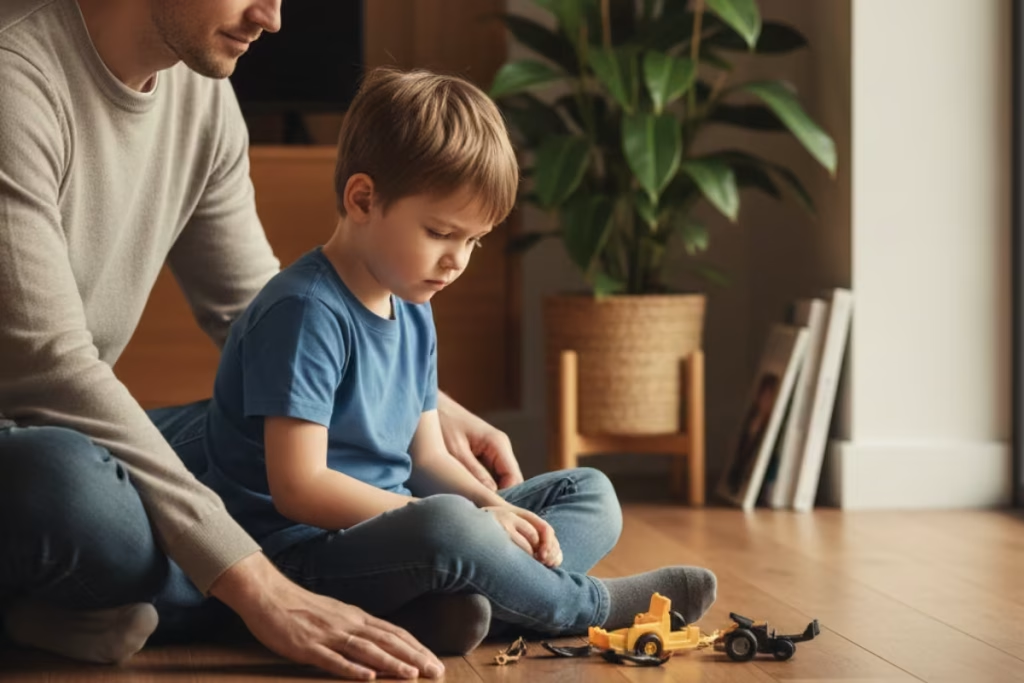
Boundaries without punishment might sound impossible but it’s actually more effective than traditional discipline. The key is understanding the difference between consequences that teach and punishment that simply makes kids suffer.
Punishment is something you do to a child to make them pay for misbehavior. Time outs, taking away unrelated privileges, yelling. It might stop the behavior temporarily but it doesn’t teach them what to do instead. Worse it damages trust and creates resentment.
Consequences are what naturally happens as a result of choices. If your child refuses to wear a coat they get cold. If they don’t pack their lunch they go hungry until snack time. If they break something through carelessness they help fix or replace it.
The hard part is letting consequences happen instead of rescuing. Every parental instinct screams at you to prevent discomfort. But sometimes discomfort is the teacher your child needs.
Natural consequences work when they’re safe and reasonable. You can’t let a toddler learn about traffic by running into the street. But you can let a school-age child experience their teacher’s response when they forget homework repeatedly.
Logical consequences are ones you create that connect directly to the behavior. If your child comes home late they lose some freedom next time. If they don’t put their bike away it gets locked up for a few days. If they hurt someone they need to make amends.
The consequence has to make sense. Taking away a birthday party because your kid didn’t brush their teeth isn’t logical. Having them brush right then even though they’re tired is. The connection between action and result should be obvious.
Clear expectations come first. You can’t enforce consequences for rules kids didn’t know existed. Have conversations during calm moments about what’s expected and what happens when expectations aren’t met. Write it down if that helps remove ambiguity.
Follow through is where most parents struggle. We set a boundary then don’t enforce it because we’re tired or we feel guilty or the whining wears us down. Inconsistent follow through teaches kids that boundaries are negotiable and actually makes behavior worse.
When you say “if you throw that toy again I’m putting it away” and they throw it you have to put it away. Even if they cry. Even if it’s their favorite. Even if you’re at someone else’s house. Otherwise your words mean nothing.
Stay calm during follow through. Your tone should communicate “this is just what happens” not “I’m punishing you because I’m angry”. State the consequence matter of factly then move on without lectures.
Age matters when setting consequences. Toddlers need immediate responses because they can’t connect actions and results over time. Preschoolers can handle same-day consequences but not next-week. Elementary kids can understand longer-term natural consequences. Teenagers need consequences that relate to independence and privileges.
Some boundaries are non-negotiable. Safety rules, respect for others, basic family functioning. These stay firm always. Other things have room for flexibility especially as kids get older. The difference is planning versus manipulation. Reasonable requests ahead of time can be negotiated. Whining in the moment gets a no.
For detailed strategies on implementing boundaries and consequences effectively including specific examples by age group read our comprehensive guide on setting boundaries with natural consequences. You’ll learn exactly how to follow through while maintaining connection.
Building emotional intelligence and self-regulation

Kids aren’t born knowing how to handle disappointment, frustration or anger. These are skills that have to be taught just like reading or riding a bike. Emotional intelligence determines success in relationships, school and eventually careers more than academic ability ever will.
Most of us grew up hearing “stop crying” or “you’re fine” when we were upset. Those messages taught us that feelings were problems to suppress. We learned to hide emotions instead of managing them healthily.
Teaching emotional intelligence starts with expanding feelings vocabulary beyond happy, sad and mad. When you label your own emotions out loud kids pick up the language naturally. “I’m feeling frustrated because traffic was terrible” or “I’m disappointed our plans got cancelled”.
Emotion charts help younger kids identify what they’re feeling. Pictures of different facial expressions with labels. When someone is upset you can point to faces and ask which one matches. This gives them words for internal experiences they can’t quite articulate yet.
Feelings aren’t just mental. They show up physically and kids need to recognize those signals. “Where do you feel that anger? Is your chest tight? Are your hands in fists?” Body awareness helps them catch emotions early before they explode.
Every child needs strategies for handling big feelings. Deep breathing works but you have to teach it during calm times not during meltdowns. Practice “smell the flower, blow out the candle” breathing at bedtime. Then when upset moments happen they already know what to do.
Some kids need movement to process emotions. Running, jumping jacks, dancing. Physical activity burns off stress hormones flooding their system. Other kids need quiet alone time. Create a cozy corner with pillows and soft things where anyone can go to reset without it being punishment.
Sensory tools help too. Stress balls, fidget toys, playdough, music. Figure out what works for your individual child through trial and error. The goal is giving them a toolkit not a single solution.
When your child has big feelings your response matters enormously. The emotion coaching framework works like this. First notice and name the feeling. “You seem really angry right now”. Second validate without judgment. “It makes sense you’re angry. Your brother knocked down your tower”.
Third help them calm down using whatever strategy works for them. Fourth once they’re calm problem-solve together if needed. “What can we do so this doesn’t happen again?” This process respects the feeling while still addressing behavior when necessary.
Full meltdowns are different from regular upset. When a child is in complete emotional overload the logical part of their brain is offline. You can’t reason with them or teach them anything in that moment. Your only job is safety and presence.
Stay nearby without crowding. Don’t talk much during peak meltdown. Maybe a soft “I’m here” or “you’re safe”. After the storm passes reconnect with a hug or quiet activity together. Once they’re fully calm you might talk about what happened but not immediately.
The hardest part of teaching emotional intelligence is accepting that your child will have negative feelings sometimes and that’s okay. You can’t and shouldn’t try to keep them happy constantly. Disappointment teaches resilience. Frustration teaches perseverance. Sadness teaches empathy.
Your job isn’t preventing your child from ever feeling bad. It’s teaching them they can survive feeling bad and come out okay on the other side. That’s a life skill worth more than any academic achievement.
To dive deeper into helping your child develop emotional regulation skills including age-specific strategies and scripts for common situations explore our complete guide on teaching emotional intelligence to children. You’ll find practical tools for turning meltdowns into learning moments.
Encouragement vs praise: building intrinsic motivation
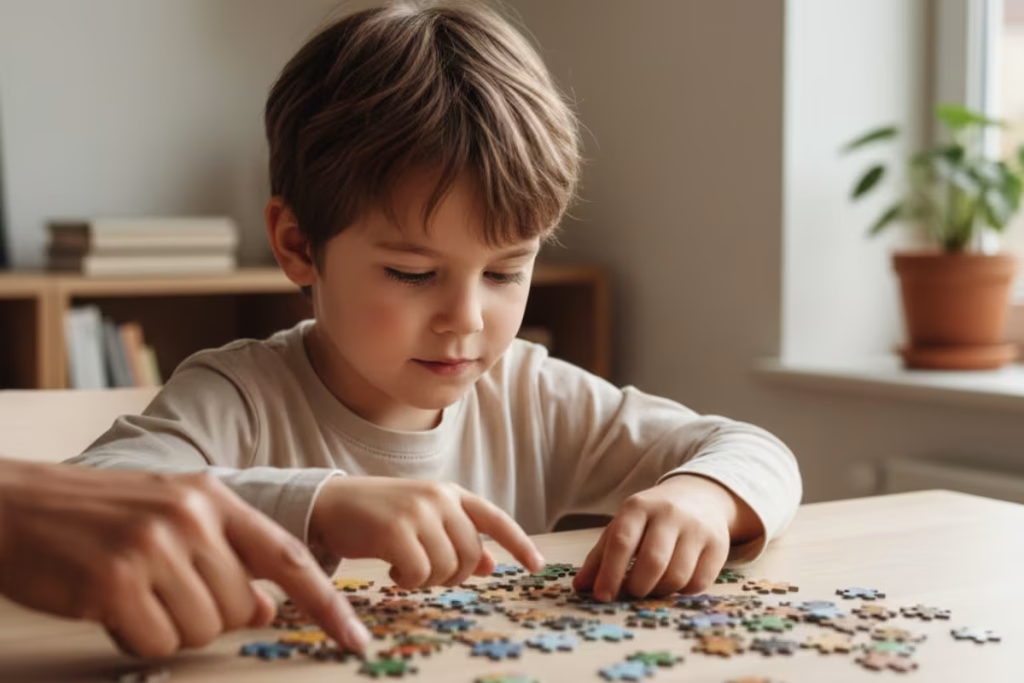
Most parents think praise builds confidence. We say “good job” dozens of times a day trying to make our kids feel good about themselves. Turns out we might be doing the opposite.
Generic praise like “you’re so smart” or “good girl” actually creates pressure and limits growth. When you tell a child they’re smart for getting an A they learn their worth is tied to performance. Next time they face something challenging they avoid it because what if they fail and prove they’re not actually smart.
Praise focuses on outcomes and labels. “That’s perfect” or “you’re talented” evaluates the child or their work. It sounds positive but it teaches kids to perform for your approval instead of pursuing activities for their own satisfaction.
Kids who depend on praise become praise junkies. They check your face after everything they do looking for validation. The internal joy of creating or learning isn’t enough anymore. They need your reaction to know if what they did has value.
Encouragement focuses on effort, process and improvement instead of outcomes or labels. It notices what the child did rather than evaluating whether it was good enough. This builds intrinsic motivation which is what you actually want.
Instead of “good job on that test” try “you studied really hard for that test”. The first praises the outcome. The second acknowledges the effort that led to the outcome. Effort is what they can control and repeat.
“You figured that out” beats “you’re so smart”. One recognizes their problem-solving process. The other labels them which creates pressure to maintain that label. When my daughter shows me artwork I say “you used a lot of blue here” or “tell me about what you made”. This invites her to talk about her experience instead of fishing for my approval.
Describe what you see without judgment. “You put your toys away” instead of “good job cleaning up”. Simple acknowledgment is often all kids need to feel noticed and appreciated. For younger kids building skills you can highlight progress. “Last week you needed help with your shoes and today you did it yourself. You’ve been practicing”.
The language of growth mindset shapes how kids think about learning and challenges. Carol Dweck’s research shows that children who believe abilities develop through effort outperform kids who think abilities are fixed traits you either have or don’t.
Stop saying “you’re a natural” or “you’re talented at this”. Those statements imply some people have it and some don’t. Instead say “you’ve practiced a lot” or “you worked hard to learn that”. When kids struggle say “you haven’t figured it out yet” instead of “you can’t do it”. That one word “yet” implies that with time and effort they will get there.
Talk openly about mistakes as learning opportunities. “What did you learn from that” becomes a standard question. Not in a punishing way but genuine curiosity. Share your own learning struggles. “I’m having trouble with this recipe but I’m going to try a different approach”. Normalizing effort and struggle shows them that’s how everyone learns.
Not all effort feedback helps equally. You have to be specific about what effort you noticed and why it matters. “You worked hard” is vague. “You kept trying even when the math was frustrating and you figured out three different strategies” tells them exactly what they did well.
Point out connections between effort and results. “You practiced spelling words every day this week and look at your test score. That practice paid off”. This helps kids see their actions have impact. Sometimes results don’t match effort despite good preparation. Separate the two. “You prepared thoroughly for that audition. Sometimes things don’t go our way even when we do everything right. The effort still mattered”.
Sticker charts and reward systems seem harmless but they create the same problem as praise. Kids learn to do things for external rewards not because the behavior itself has value. They become little negotiators. “What do I get if I do this?
Removing rewards feels scary but usually works better than expected. Explain that we do chores because we’re a family and everyone contributes. We read because stories are enjoyable. We behave in public because we respect others. There’s pushback initially but within weeks most kids adapt. They actually start doing things more willingly when you’re not constantly bribing them.
Part of building intrinsic motivation is letting kids struggle and figure things out. This goes against every parental instinct to help and fix. When your daughter says “I can’t do this” try “this is tricky. What have you tried so far?” instead of immediately showing the answer. She learns to trust her own problem-solving abilities.
Ask questions that guide without solving. “What do you think would happen if you tried it this way?” “What’s another approach you could use?” This keeps ownership with them while still providing support. Sometimes you can straight up say “I think you can figure this out”. That statement communicates confidence in their abilities and they usually rise to meet it.
The shift from praise to encouragement changes the entire dynamic of how your child approaches life. A praise-dependent child performs for approval. An encouraged child pursues mastery for its own sake. One is fragile and needs constant external validation. The other is resilient and self-directed.
For more depth on implementing encouragement instead of praise including specific phrases to use and avoid read our detailed guide on building intrinsic motivation in children. You’ll see exactly how to shift your language in ways that foster genuine confidence.
Handling common bhavioral challenges
Theory matters but what parents really need are solutions for the daily battles that make you question everything. Morning chaos. Sibling fights. Homework resistance. Screen time wars. These problems show up in every household and they test even the calmest parent.
The good news is that most behavioral issues respond to the same core principles. Stay calm, be consistent and let natural consequences teach. You can’t control your child’s behavior but you can control your response and create systems that set everyone up for success.
Morning routine battles drain energy before the day even starts. Nagging and rushing while kids move in slow motion creates stress for everyone. The solution isn’t getting up earlier or yelling louder. It’s creating systems that put responsibility on them instead of you.
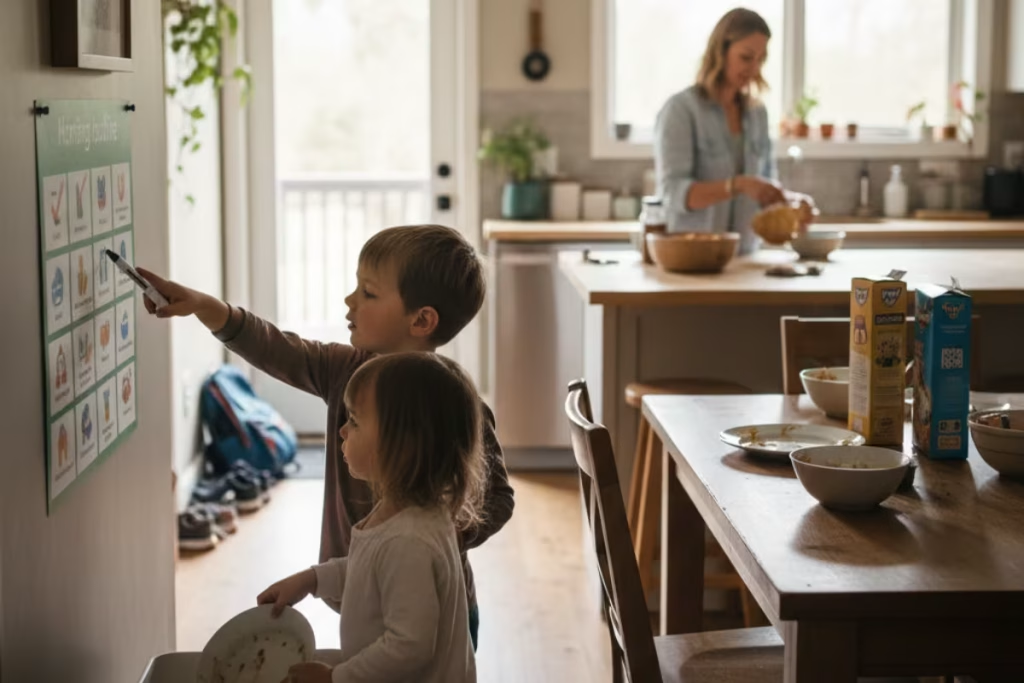
Visual morning checklists work wonders especially for younger kids. Pictures showing each task. Get dressed, brush teeth, eat breakfast, pack backpack, put on shoes. They can see what needs to happen without you repeating yourself constantly. Set a timer and establish that you leave at a specific time whether they’re ready or not. The first time they go to school in pajamas or without their homework because they chose to play instead is usually the last time. Natural consequence teaches better than any lecture.
Lay out clothes the night before. Make breakfast something quick they can grab. Remove obstacles that create unnecessary friction. But don’t do everything for them because that breeds dependence. Stay calm when they’re not ready. Your stress amplifies their stress. “Looks like you’re not ready yet. We’re leaving in five minutes” said neutrally works better than frantic rushing.
Sibling rivalry makes parents want to hide in the bathroom for peace. Kids fight about everything. Who sits where. Who touched whose stuff. Who looked at who wrong. Refereeing every conflict exhausts you and teaches them to tattle constantly because they know you’ll intervene.
Stay out of it unless someone is getting hurt. “Sounds like you two have a problem to solve. Let me know when you figure it out” then leave the room. They’ll follow you complaining at first but consistency pays off. Eventually they start working things out because you’re not available to solve it for them.
When they genuinely can’t resolve something facilitate without taking sides. “You both want the tablet. What are some solutions?” Write down every idea without judging. Usually they come up with reasonable compromises like taking turns or playing together. For physical fighting the consequence is simple. If you can’t be kind you can’t be together. Both kids get separated immediately. No investigation into who started it. Just natural result of their choices.
Reduce competition between siblings. Stop comparing abilities or achievements. Give individual attention to each child separately so they’re not fighting for your focus. Sibling relationships improve dramatically when you stop pitting them against each other even unintentionally.
Homework struggles destroy evenings and damage the parent-child relationship. Kids avoid it, rush through it or melt down over it. Parents end up doing it with them which defeats the purpose entirely. The shift starts with recognizing homework is their responsibility not yours. Their teacher needs to see what they can do independently.
Set up a homework time and place. Same time daily, quiet spot with necessary supplies available. Consistency removes daily negotiation. Stop hovering. Be available for questions but don’t sit with them. If they’re stuck ask questions that guide their thinking instead of giving answers.
Let natural consequences happen. If they don’t finish homework they face whatever response their teacher has. Not your problem to solve. After experiencing that consequence a few times most kids manage their time better. For kids who genuinely struggle not just avoid it talk to the teacher about accommodations. But pretending they can do work they can’t or doing it for them helps no one.
Screen time creates the biggest modern parenting battles. Kids would watch or play all day given the chance. Negotiations and meltdowns when screen time ends are exhausting. Make it completely non-negotiable and take yourself out of the equation. Everyone gets a set amount of screen time daily. They can use it whenever they want in whatever chunks. A timer tracks it. When it’s gone it’s gone. No exceptions, no bargaining, no “just five more minutes”.
The first week involves testing every angle to get more time. Stay calm and consistent. After that most kids manage their time carefully because they’ve learned the boundary is firm. No screens during meals or within an hour of bedtime. These rules support family connection and healthy sleep. Not up for debate.
Bedtime resistance used to take hours of begging and multiple trips back to rooms. Consistent bedtime routine changed everything. Same order every night. Bath, brush teeth, two books, lights out. Bodies learn to wind down because the pattern signals sleep is coming. Give ten-minute and five-minute warnings so they can transition mentally instead of an abrupt “bedtime right now”.
Once lights are out leave the room. If they come out walk them back silently without engaging. No conversation, no negotiation, no eye contact. Boring response means they stop trying because they’re not getting entertainment. For kids who genuinely can’t sleep allow quiet activities in bed. Reading, looking at books, listening to soft music. They have to stay in their room but they don’t have to sleep immediately.
Public meltdowns make parents want to disappear. Full tantrum breakdowns in Target or restaurants while everyone stares and judges. The instinct is stopping the behavior immediately to avoid embarrassment often by giving in. This teaches kids that public meltdowns work.
Stay calm and follow through with consequences regardless of audience. If your toddler throws a fit in the grocery store pick them up and leave even if your cart is full. The errand isn’t more important than the lesson. For older kids find a quiet spot away from people. Car, bathroom, outside. Then wait it out with calm presence until they settle.
Prevention helps. Don’t take hungry or tired kids on long errands. Bring snacks and entertainment. Set clear expectations before going in. “We’re buying milk and bread not toys. If you ask for toys we’re leaving”. Stop caring what strangers think. Most parents have been there. Your child’s learning matters more than opinions from people you’ll never see again.
Back-talk and defiance feel personal and disrespectful. They trigger immediate anger in most parents. Understanding that back-talk often signals attempts at independence or upset about something else helps you respond instead of react. Address tone without engaging content. “I can see you’re upset but I need you to speak respectfully. Try again”. This gives them a chance to rephrase without losing face.
If they won’t adjust tone walk away. “I’m willing to talk when you can be respectful”. No lecture, no punishment, just boundary. When they calm down and approach appropriately you can discuss the actual issue. For defiance pick your battles. Is this about safety, respect or values? Then it’s non-negotiable. Is it about preference or control ? Maybe you can give flexibility.
Lying panics parents but most kids lie to avoid punishment or disappointment. If the consequence for honesty is harsh they’ll keep lying. Create safety for truth-telling. When your child admits a mistake thank them for honesty and address the issue without anger. If they lie address the lie separately from the original mistake. “The spill isn’t a big deal. The lying worries me because I need to trust you”
For bigger lies consequences focus on rebuilding trust not punishment. Extra check-ins, supervised activities until trust is earned back. Logical connection to the behavior. Model honesty including admitting your own mistakes. Kids learn integrity from watching you live it.
These practical solutions work best within the complete framework of positive discipline. When you understand development, communicate effectively, set clear boundaries and teach emotional skills the daily challenges become more manageable. None of this works perfectly every time because kids are humans not robots. But having a toolkit beats winging it when problems arise.
For specific step-by-step guidance on implementing these strategies in real-life situations check out our comprehensive solutions for common childhood behavioral problems. You’ll find detailed examples of how to handle morning battles, sibling conflicts, homework struggles and more with confidence.
Positive discipline is a long-term approach that focuses on teaching skills rather than controlling behavior through fear or punishment, which strengthens the parent child relationship and builds lasting competence. It combines age appropriate expectations, respectful communication, clear boundaries, emotional intelligence and encouragement to develop intrinsically motivated, resilient children who can think critically, manage their feelings and maintain healthy relationships. Even with inevitable parental mistakes, small, consistent changes and practical strategies for everyday challenges can gradually transform family dynamics and help break harsh generational patterns.