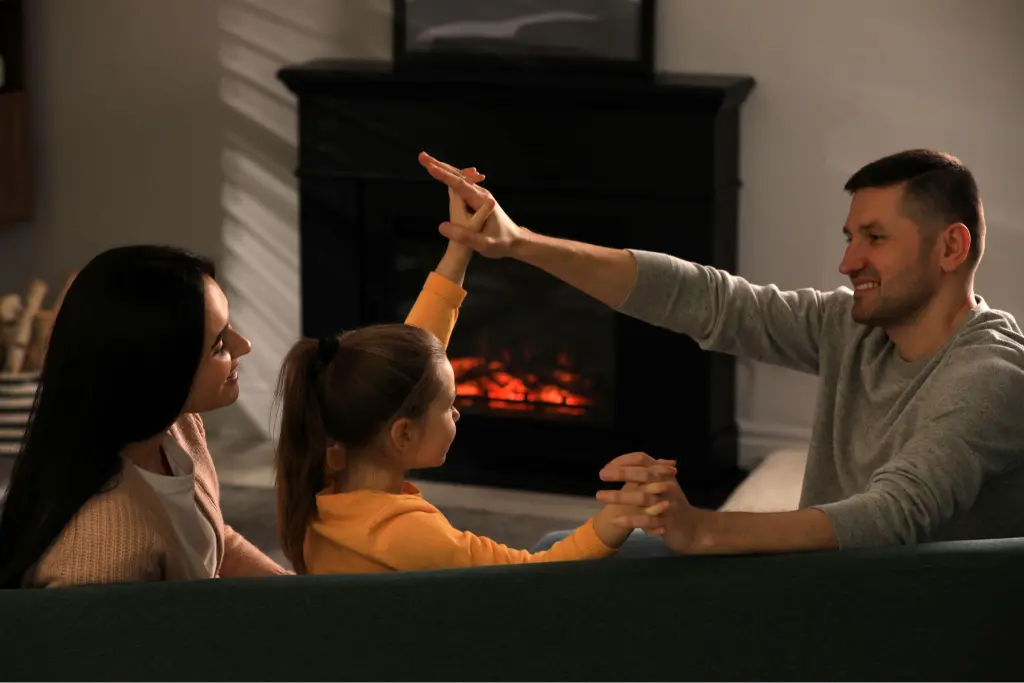
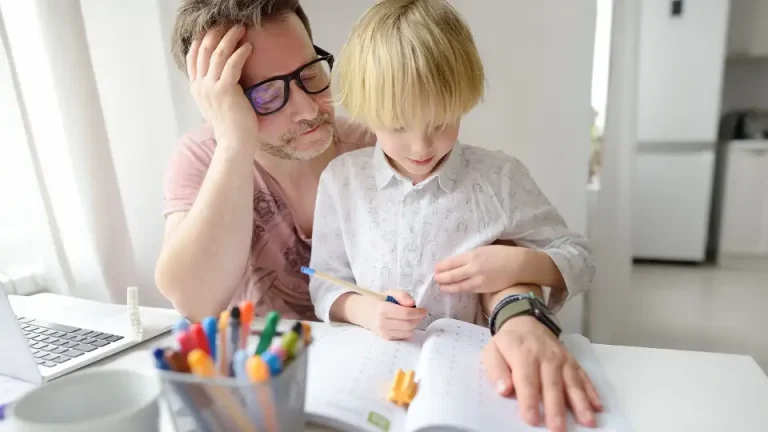
In the world of parenting, we are often prepared for the “loud” emotions the yelling, the frustration, and the visible irritation. But there is another, much quieter state that many parents experience, yet few talk about: Emotional Numbness. You might find yourself going through the motions of the day preparing meals, handling bedtime, and answering questions but feeling as though you are behind a thick pane of glass. You see your children, you care for them, but you cannot seem to access the warmth, joy, or even the anger that usually defines the relationship.
In the journey of parent wellness, this state of “flatness” is often more terrifying than rage. Parents worry they have lost their ability to love or that they are becoming “cold.” However, from the perspective of inner awareness, numbness is rarely a sign of not caring. In fact, it is often a sign that you have cared too much for too long. It is your nervous system’s ultimate survival strategy: the Freeze Response.
The biological emergency brake
To understand numbness, we must look at the hierarchy of the nervous system. When we are stressed, we usually move into “Fight or Flight” (Hyper-arousal). But when the stress becomes chronic, overwhelming, or feels inescapable as parenting often can the brain decides that fighting or fleeing is no longer working. To prevent a total system collapse, it pulls the emergency brake.
This state is known as Hypo-arousal. Your body slows down, your heart rate drops, and your emotions are “muted.” Think of it as a circuit breaker in a house; when there is too much electricity (stress) for the wires to handle, the breaker trips to prevent a fire. Emotional numbness is your body’s way of preventing an emotional “fire.” You aren’t “checking out” because you are a bad parent; you are checking out because your system is trying to save your life from total burnout.
Why numbness replaces anger
For many parents, numbness is a learned protective mechanism from childhood. If you grew up in an environment where expressing big emotions especially anger or grief was unsafe, your nervous system learned that the only way to survive was to “shut down.”
As an adult, when your child’s behavior pushes you to your limit, your body doesn’t move into the “Fight” response because it still associates anger with danger. Instead, it defaults to the old, reliable “Freeze.” You go quiet, you feel heavy, and you withdraw internally. While this keeps the peace in the household temporarily, it leaves you feeling isolated and deeply disconnected from the very people you love most.
Awareness box: the “Thawing” Check-in
If you are currently in a state of numbness, do not try to force a “big” emotion like joy or love. Instead, focus on small, sensory “thawing” exercises:
Temperature: Hold a cold orange or a warm cup of tea and focus entirely on the sensation against your skin.
Weight: Feel the weight of your feet on the floor. Say to yourself: “I am safe. I am present. My system is resting.”
Acknowledging that your numbness is a “protective shield” rather than a “character flaw” is the first step in allowing that shield to eventually drop.
The cost of chronic shutdown
While the freeze response is a brilliant short-term survival tool, living in a state of chronic numbness takes a heavy toll on parent wellness. When we are numb, we lose our “social engagement system”—the part of the brain that allows us to read our child’s facial expressions, offer genuine empathy, and feel the “spark” of connection.
This creates a painful cycle:
The Shutdown: You feel numb to protect yourself from stress.
The Disconnection: Your child senses your “absence” and acts out more to get a reaction.
The Guilt: You see your child struggling and feel guilty for your lack of feeling, which adds more stress to your system.
Reinforcing the Freeze: The extra stress causes your brain to double down on the numbness to survive the guilt.
Breaking this cycle requires a radical shift in how we view our “flatness.” We must stop judging the numbness and start providing the safety the nervous system is begging for.
From survival to safety: how to return
Coming out of a freeze response cannot be rushed. If you try to “force” yourself to be happy or engaged, your nervous system will perceive that pressure as more stress and stay shut down even longer.
Reduce Stimulation: The brain enters freeze because it is over-stimulated. Turn off the background noise, dim the lights, and simplify your schedule. Give your system the “sensory quiet” it needs to feel safe.
Gentle Somatic Movement: Numbness is a state of “stuck” energy. Very gentle movements like slow stretching or swaying can help signal to the body that it is safe to move again without triggering a “fight” response.
Name it Without Shame: Tell your partner or a trusted friend: “My system is in a bit of a shutdown right now. I’m physically here, but I’m feeling a bit distant. I just need some space to recalibrate.”
The return of feeling
As your nervous system begins to feel safe, the numbness will start to “thaw.” It is important to know that when the fog lifts, the first emotions to return might not be “pleasant” ones. You might feel a rush of the grief, anger, or exhaustion that the numbness was hiding.
In the world of inner work, this is a sign of progress. It means your “circuit breaker” has reset. By allowing these feelings to flow through you without judgment, you are teaching your body that it no longer needs to shut down to survive. You are reclaiming your capacity to feel the full spectrum of your life.
Conclusion
Emotional numbness is not a sign of a cold heart; it is a sign of an exhausted soul. It is the silent cry of a parent who has been carrying too much for too long. By honoring this “internal silence” as a protective friend rather than a shameful enemy, you create the very safety required to bring your heart back online.
When we understand the biological roots of our shutdown, we gain a new perspective on our entire parenting journey. We realize that our reactions or lack thereof are not random. They are part of a larger, internal architecture that has been shaped by our history and our nervous system. This brings us to the final piece of the puzzle: understanding how these deep-seated emotional patterns and survival strategies have ultimately woven themselves into our unique parenting style.
In the modern landscape of parenting, there is an invisible, persistent pressure to be “on” at all times. We are surrounded by images of the idealized parent: the one who is infinitely patient, creatively engaged, and perpetually productive. For many in the USA and Canada, this cultural standard has transformed parenting from a relationship into…
Being in a relationship means bringing together two different emotional worlds. It is not always easy to balance the needs, fears, and expectations of two people growing side by side. In moments of tension, emotional maturity in a couple becomes the key to a stable and fulfilling relationship. It is not the number of years…
Stress in children rarely announces itself clearly. Here is what parents need to watch for and how to respond with calm and confidence. Most of the time, stress shows up in small changes that are easy to miss at first. A child may become quieter than usual. Another may snap at siblings over nothing. Some…
Healthy coping does not mean eliminating every difficult emotion. It means helping adolescents recognize stress, regulate their response, and choose actions that protect their well-being. Useful coping skills for teens can include breathing exercises, physical movement, consistent sleep, creative activities, realistic planning, and trusted social support. Hapidoo’s [complete teen stress management guide for families](/wellbeing/emotional-intelligence/stress-management-for-teens/) connects…
Parenting is often described as one of life’s most meaningful experiences. Yet beneath the love, responsibility, and daily routines, many parents carry an invisible burden that few people talk about openly. It is not the tantrums. It is not the sleepless nights. It is not even the endless responsibilities. For many parents, the hardest part…
Big emotions can turn everyday moments into something heavy. A small disappointment becomes tears a simple request leads to anger. Many parents in the US worry that something is wrong when emotions feel this intense, i want to slow that fear down big emotions are not a sign of failure, they are a sign of…