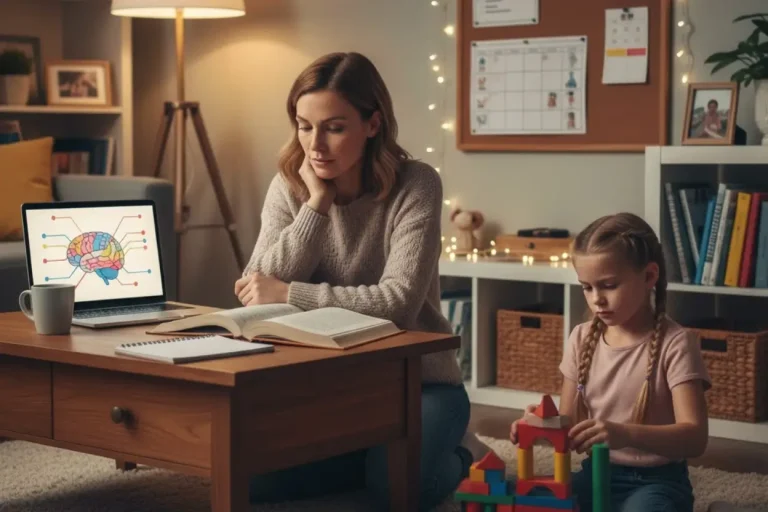
What Is Conscious Parenting?

Parenting has evolved significantly in recent years. More and more parents are seeking to raise their children with kindness, trust, and respect. The concept of conscious parenting is part of this evolution. It invites parents to adopt a more thoughtful and emotionally present approach in their parenting role.
Conscious parenting is not based on a rigid method or ready made formulas. Above all, it is a way of being a mindset. It encourages mothers and fathers to observe their own reactions, to pause before responding to their children, and to understand the needs behind each behavior. According to this approach, every interaction is an opportunity to grow together, parent and child.

An Approach centered on awareness and presence
Being a conscious parent means learning to be fully present, even during moments of tension. It means truly listening to your child without trying to control everything. In practice, this requires slowing down, breathing, and paying attention to what you are feeling before acting.
Children do not develop only through what they are taught, but also through the emotional energy they receive. An impulsive reaction or a hurtful word can leave a deep mark. On the other hand, a calm and respectful response creates a sense of inner safety for the child.
Conscious parenting helps create this climate of trust. It invites parents to recognize that their role is not to impose, but to guide. To explore this approach more deeply and apply it in daily life, the complete guide to a Conscious Parenting Mindset helps explain the foundations of this parenting philosophy.
Understanding before correcting
Many parents react out of habit or exhaustion. Often, the focus is on “correcting” behavior without seeing the root of the problem. Conscious parenting invites parents to go further to look for the hidden need behind a child’s behavior.
A child who screams, cries, or refuses to listen is often expressing something else: fear, frustration, or a need for attention. By identifying these emotions, parents can respond more effectively, without judgment or authoritarianism.
This does not mean allowing everything. It means setting clear boundaries, but with empathy. This approach teaches children that their emotions are valid, even if certain behaviors are not.
In families that adopt this mindset, there is generally more cooperation, fewer conflicts, and smoother communication. The child feels understood rather than controlled.
The Role of emotional intelligence
Conscious parenting relies heavily on the development of emotional intelligence. To raise an emotionally balanced child, parents must learn to regulate their own reactions. This inner work is often the most challenging, but also the most transformative.
A parent who acknowledges their anger or fatigue without projecting it onto the child shows, by example, that it is possible to feel emotions without being overwhelmed by them. This modeling is one of the most powerful educational tools.
Neuroscientists confirm that children learn emotional regulation through imitation. They observe adults and replicate the way they react. In this way, every moment of disagreement becomes a learning opportunity.
Rethinking parental authority
Conscious parenting does not reject authority—it redefines it.
Authority is no longer based on fear or punishment, but on clarity, consistency, and mutual respect.
A conscious parent understands that perfection is not required—consistency is. This consistency helps the child feel safe. When a parent’s words and actions align, the child more easily accepts boundaries and understands that they exist to protect them.
This approach also encourages autonomy. Instead of deciding everything for the child, parents invite them to think about the consequences of their choices. This is how children develop responsibility and self-confidence.
Benefits for the parent-child relationship
Adopting conscious parenting deeply transforms the family bond. Tensions ease, and interactions become more respectful. The home becomes more harmonious not because everything is perfect, but because everyone learns to speak from the heart.
Children raised in this environment develop strong self-esteem. They feel understood, heard, and unconditionally loved. This emotional foundation supports them throughout their lives, in both personal and professional relationships.
Parents, in turn, discover a new sense of calm. They realize they do not have to control everything, but rather to support and guide. This awareness frees up a great deal of energy and reduces the guilt that often weighs on parents.

Parenting as an ongoing journey
Conscious parenting is a path, not a destination. Every parent learns along the way. Some days patience runs thin; other days calm comes more easily. What matters is the willingness to grow, to stay connected to oneself and to one’s children.
Even mistakes become opportunities when there is listening and repair. Apologizing to your child and acknowledging your own faults teaches far more than beautiful words ever could. It shows that growth is possible at any age together.
Conscious parenting invites us to slow down, observe, and act with presence. It transforms the way we love and guide our children. It is not a method, but a way of being one that requires courage, patience, and a great deal of empathy.
To continue this reflection, discover how healthy family relationships are built through conscious communication and mutual respect in the article Healthy Family Relationships Through Conscious Parenting.
For a first practical tool you can apply immediately, explore daily conscious parenting practices. These simple actions mark the beginning of a more harmonious everyday life.