Helping children manage big emotions: Coping skills for kids

Big emotions can turn everyday moments into something heavy. A small disappointment becomes tears a simple request leads to anger. Many parents in the US worry that something is wrong when emotions feel this intense, i want to slow that fear down big emotions are not a sign of failure, they are a sign of a developing nervous system learning how to handle a complex world.
Helping children manage big emotions is not about stopping feelings or controlling behavior at all costs. It is about teaching coping skills for kids that respect development, build safety and strengthen connection. When children feel supported rather than corrected, emotions become easier to navigate for everyone involved.
As a former teacher and coach I have watched families change when they shift their focus. Instead of asking how to make emotions disappear, they begin asking how to guide children through them. That shift opens the door to calmer homes and stronger relationships.
This guide speaks to parents who care deeply and want practical, humane ways to support emotional growth. It brings together understanding, daily strategies and long term skills so children do not just survive emotions but learn to live with them.
Understanding big emotions in children

Before coping skills can truly work, parents need clarity big emotions often feel alarming because they look dramatic, crying seems endless. anger appears explosive, fear feels irrational. Without context these reactions can seem out of proportion, with understanding they make sense.
Big emotions are intense emotional responses that overwhelm a child’s current ability to regulate. Children feel emotions in their whole body. Their heart races. Their muscles tense. Their thoughts scatter. This is not manipulation or defiance. It is a nervous system under pressure.
A child’s brain develops in layers. The emotional centers mature before the areas responsible for impulse control and reflection. This means children feel deeply long before they can think calmly. Expecting adult level regulation from a young brain sets everyone up for frustration.
Age plays a major role. Toddlers react physically because language is limited. Preschoolers struggle with frustration as independence grows. School age children face comparison, fairness, and social pressure. These stages are temporary. Emotional maturity grows with time and support.
Stress amplifies emotions. Hunger, fatigue, change, and overstimulation lower emotional tolerance. A long school day or missed snack can turn a small problem into a big reaction. When parents address these hidden stressors, emotional intensity often decreases.
The nervous system also matters. When a child feels overwhelmed, the body shifts into survival mode. Logic shuts down. Safety becomes the priority. This is why reasoning or lecturing during emotional peaks rarely works. The body must calm before the mind can engage.
Many adults were taught to suppress emotions. That approach does not teach regulation. Suppressed feelings tend to resurface later with more force. When children are told to stop crying or calm down without guidance, they learn that emotions are unacceptable. Shame grows. Regulation does not.
A healthier path allows emotions while guiding behavior. You can accept feelings without accepting harmful actions. This balance prepares children to use coping skills for kids that support expression and self control together.
Parents play a central role in emotional development. Children learn emotional patterns through relationships. A calm adult response teaches the nervous system that emotions are safe. This does not require perfection. It requires repair. Apologies and reconnection after stress build trust and resilience.
Understanding what is normal brings relief. It helps parents respond with patience instead of fear. That patience creates space for learning. If you want a deeper look at what intense emotions look like across different ages and why they happen, the guide on big emotions in children offers a clear developmental perspective that supports this foundation.
Once understanding is in place, coping skills become more effective. Skills land better when children feel seen. They stick when parents know why emotions show up
Coping skills forkids practicaltools to manage big emotions
Once parents understand why emotions feel so intense, the next step is helping children handle them. Coping skills for kids are not quick tricks to stop behavior. They are tools children use to return to balance when emotions take over. These skills work best when they are simple, practiced often, and matched to a child’s age and temperament.
Children do not learn coping skills in the middle of emotional chaos. They learn them through repetition in calm moments and gentle guidance during stress. Over time these tools become familiar. Familiarity creates confidence.
One of the most effective starting points is emotional language. When children can name what they feel, emotions become less frightening. Simple reflections help.
You seem frustrated
That was disappointing
Naming emotions does not fix the problem. It reduces intensity. When a child feels understood, the nervous system begins to settle. This creates space for regulation.
Breathing is another core skill, but it must feel doable. Telling a child to take deep breaths often increases frustration. Make breathing concrete and playful.
Blowing out pretend candles
Blowing bubbles together
Breathing with a stuffed animal on the belly
Practice these during calm moments. Skills learned when calm are easier to access during stress. Breathing is not about stopping emotions. It is about giving the body permission to slow down.
Movement helps many children regulate. Gentle stretching, walking, or squeezing something soft releases tension. Some children need motion to settle their body before they can talk. Others need stillness. Observe what helps your child rather than forcing one method.
Creating a calm down space can support regulation without punishment. This is not a time out. It is a place to reset. Pillows, books, drawing materials, or sensory items can help. Invite your child to the space rather than sending them away. Choice restores a sense of control. Control reduces emotional intensity.
Teaching children to notice body signals builds early awareness. Ask gentle questions during neutral moments.
What does your body feel like when you start getting upset
Do your hands feel tight when you are angry
This awareness helps children catch emotions earlier and use coping skills sooner. Early use prevents escalation.
Modeling matters deeply. Children learn regulation by watching adults. When parents name their own emotions and coping actions, children absorb those patterns.
I feel frustrated so I’m taking a breath
I need a moment before I answer
This shows that regulation is a skill, not a personality trait. Parents do not need to be calm all the time. They need to be reflective and honest.
Coping skills grow stronger when paired with daily routines. Consistent sleep, regular meals, and predictable transitions lower stress on the nervous system. Many emotional outbursts are fueled by fatigue or hunger. Structure acts as invisible support.
Coping skills are not meant to erase emotions. They are meant to guide children through them. Progress often looks uneven. A child may still cry or get angry, but recover faster or need less support. Those shifts matter.
If you want a focused set of strategies that parents can use right away, the guide on coping skills for kids with big emotions brings these tools together in a practical and age sensitive way.
Understanding and tools prepare the ground. The real test comes in the moment emotions overflow. How parents respond during meltdowns shapes whether skills strengthen or fall apart.
Supporting children during emotional meltdowns
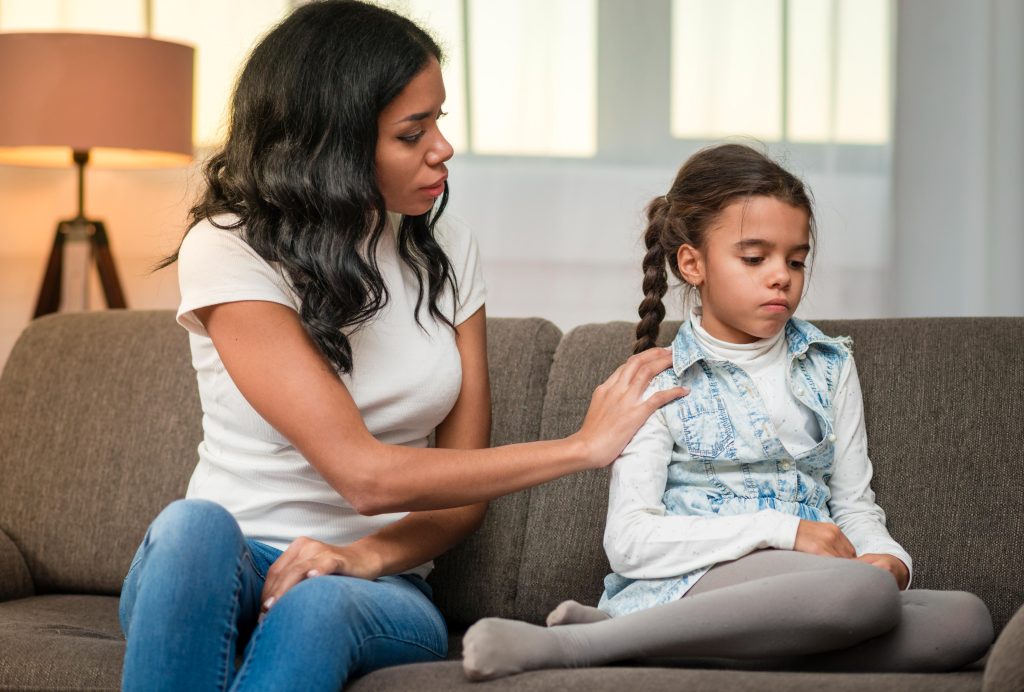
Even with strong coping skills, meltdowns still happen. They are part of learning. What matters most is how adults respond when emotions overflow. Meltdowns are not moments for teaching lessons or correcting behavior. They are moments for safety, containment, and calm authority.
A meltdown is a stress response. The emotional brain takes over and the thinking brain goes offline. Logic cannot reach a child in this state. When parents try to reason, explain, or threaten consequences, frustration grows on both sides.
The first step during a meltdown is regulating yourself. Children borrow calm from adults. If your body tightens or your voice rises, pause. Take one slow breath. Lower your voice. Slow your movements. You do not need to be perfectly calm. You need to be calmer than your child.
What you say matters less than how you say it. Use short, steady phrases.
I see you are very upset
I am here with you
We will talk when your body feels calmer
Avoid questions or explanations at the peak of emotion. Presence does the work.
Supporting emotions does not mean allowing unsafe behavior. Limits are still necessary. The difference lies in delivery.
I will not let you hit
I cannot allow that
State the limit once. Repeat calmly if needed. Do not argue. Clear limits paired with calm presence help children feel protected rather than controlled.
The body needs help calming before the mind can engage. Sitting nearby, offering water, or suggesting holding something soft can help. Some children need space. Others need closeness. Watch your child rather than following rigid rules.
Public meltdowns add pressure. Parents worry about judgment and rush to stop the behavior. Remember that your child’s needs come first. Step aside if possible. Lower your voice. Focus on safety and connection, not appearances.
After calm returns, brief reflection supports learning.
You were really angry when that happened
What could help next time
Keep conversations short. One or two gentle reflections are enough. This is where coping skills connect to real life.
Avoid common traps. Explaining too much too soon, threatening consequences, or using shaming language increases stress and delays learning. Simplicity and steadiness work better.
Some children experience meltdowns more frequently due to temperament, stress, or developmental differences. Frequent meltdowns do not mean poor parenting. If emotional outbursts interfere with daily life or last a long time, support from a child therapist can help both children and parents build regulation together.
Parents also need care. Handling meltdowns is emotionally demanding. Guilt after losing patience is common. Repair matters more than perfection. A simple apology teaches accountability and connection.
I should not have raised my voice
I am learning too
Calm responses during meltdowns teach children that emotions are manageable and relationships are safe. For parents who want a deeper look at responding in these intense moments, the guide on how to handle emotional meltdowns without yelling offers clear support for real life situations.
Meltdowns are the storm. Regulation is the climate. What happens in daily life shapes how often storms appear.
Building emotional regulation skills for everyday life
Emotional regulation is not built only during meltdowns. It grows quietly through daily life. The way mornings begin, how transitions are handled, and how emotions are spoken about all shape a child’s ability to manage feelings over time. When regulation becomes part of routine, big emotions feel less threatening for everyone.
Emotional regulation means noticing emotions, tolerating them, and choosing how to respond. For children, this skill is still developing. The brain areas responsible for impulse control and reflection mature slowly. That is why consistency matters more than intensity.
Connection is the foundation. Children regulate better when they feel emotionally safe. Starting with empathy lowers emotional load.
That was really hard
You seem disappointed
Empathy does not remove limits. It creates the conditions for cooperation. A child who feels understood is more open to guidance.
Daily routines play a powerful role in regulation. Predictable rhythms help children feel secure.
Regular sleep schedules
Consistent meal times
Clear transitions between activities
When the body feels safe, emotions are easier to manage. Many emotional outbursts are rooted in exhaustion or hunger rather than behavior problems.
Teaching children to notice internal signals builds self awareness. Emotions show up in the body before they show up in behavior. Help children explore this gently.
What does your body feel like when you get nervous
Do your shoulders feel tight when you are angry
This awareness allows children to use coping skills earlier. Early use prevents escalation.
Small daily practices strengthen regulation. Short moments matter more than long lessons.
Breathing together before bedtime
Stretching after school
Quiet drawing or reading time
These practices teach the nervous system what calm feels like. Calm becomes familiar. Familiar calm is easier to return to during stress.
Modeling remains one of the most effective tools. Children learn regulation by watching adults manage emotions.
I feel overwhelmed so I’m taking a breath
I need a moment before I respond
This shows children that emotions are normal and manageable. Parents do not need to be flawless. Honest modeling builds trust.
Emotional challenges appear outside the home as well. School, friendships, and activities all test regulation. Parents can prepare children through conversation and role play.
What could you do if school feels overwhelming
Who could you ask for help
These discussions build confidence and flexibility. Skills practiced at home travel outward.
Some children experience emotions more intensely due to temperament or life stress. Strong emotions do not mean something is wrong. They mean a child needs more support. If emotions interfere with daily life, professional guidance can help families build regulation together.
Parents also need regulation support. Chronic stress makes calm responses harder. Caring for yourself is not selfish. It strengthens your ability to care for your child.
Emotional regulation grows through relationship. Children learn how to manage emotions by being repeatedly understood, guided, and supported. Progress appears in small shifts. Faster recovery. Fewer explosions. More words and fewer actions.
For parents who want to anchor these habits into daily routines, the guide on emotional regulation skills for kids to use in daily life offers practical ways to make regulation part of everyday living.
Helping children manage big emotions is not about raising calm children all the time. It is about raising children who feel safe enough to experience emotions and skilled enough to recover from them. Big feelings are part of healthy development. What shapes the outcome is how those feelings are met.
When parents understand why emotions are intense, use coping skills for kids with consistency, respond calmly during meltdowns, and build regulation into daily life, emotional growth becomes possible. Progress shows up quietly. A child pauses instead of exploding. Words replace actions. Recovery comes faster.
This work takes time. It also builds something lasting. Children who learn to manage emotions grow into adults who trust themselves and their relationships.
If you want tools you can start using right away, the guide on coping skills for kids with big emotions offers practical strategies that support children in everyday moments when emotions feel hardest.