Child development stages: Age-appropriate parenting expectations

I remember the first time my daughter threw herself on the floor screaming because I gave her the wrong color cup. She was two and I felt like the worst parent on earth. Looking back now I realize I was expecting her brain to function like mine. That’s where most of us get it wrong.
Understanding how your child’s brain actually develops changes everything about how you parent. When you know what’s happening inside their head you stop taking behaviors personally and start responding with strategies that actually work.
The brain growth timeline nobody tells you about
Your child’s brain doesn’t finish developing until their mid-twenties. Let that sink in for a moment. The prefrontal cortex which controls impulse control, planning and emotional regulation is literally under construction throughout childhood.
From birth to age three your child’s brain forms over one million neural connections every single second. They’re not trying to make your life difficult when they can’t share toys or wait their turn. Their brain literally cannot process those concepts yet.
Between ages three and five the emotional center of the brain (the amygdala) is running the show while the logical thinking part is barely online. This explains why your preschooler melts down over sandwich shapes or sock seams. Their feelings are huge and overwhelming because the part of the brain that says “this isn’t actually a crisis” hasn’t kicked in yet.
The elementary years from six to twelve bring major growth in logical thinking. Kids can finally understand cause and effect, follow multi-step instructions and start seeing other perspectives. But they still struggle with abstract thinking and long-term planning. Asking a seven-year-old why they did something often gets you “I don’t know” because they genuinely don’t understand their own motivations yet.
What’s normal vs what needs attention
I spent years worrying about behaviors that turned out to be completely typical for my kids’ ages. Here’s what helped me figure out the difference.
Normal toddler behavior includes hitting when frustrated, saying no to everything and having zero impulse control. They’re not being defiant on purpose. Their brain hasn’t developed the wiring for self-control yet. Expecting a two-year-old to “use their words” when upset is like expecting them to solve algebra problems.
Preschoolers naturally test boundaries constantly. They lie about obvious things like whether they ate the cookies with chocolate still on their face. They struggle to sit still for more than a few minutes. They have intense friendships one day and refuse to play with the same kid the next day. All normal.
School-age children should start showing better emotional regulation but they’ll still have meltdowns when tired or hungry. They might struggle with homework not because they’re lazy but because executive function skills are still developing. The ability to plan, organize and manage time doesn’t fully emerge until the teenage years.
Red flags that something might need professional support include behaviors that are extreme compared to same-age peers, aggression that increases over time instead of decreasing or emotional reactions that interfere with daily life consistently. Trust your gut but also trust developmental science.
Matching your expectations to reality
The biggest mistake I made as a new parent was having expectations my kids couldn’t possibly meet. I expected my three-year-old to sit through a two-hour dinner at a fancy restaurant. I expected my five-year-old to remember a three-step morning routine without reminders. I expected my seven-year-old to choose homework over playing without any struggle.
Once I learned about brain development I adjusted my expectations and suddenly parenting got easier. Not easy but definitely easier.
For toddlers I stopped expecting them to share willingly or wait patiently. Instead I planned activities around their fifteen-minute attention span and kept backup snacks everywhere. I gave simple one-step directions and showed them what to do instead of just telling them.
With preschoolers I accepted that they need to move their bodies constantly. I built movement breaks into our routine instead of fighting their natural energy. I gave choices between two acceptable options so they felt some control without actually running the show.
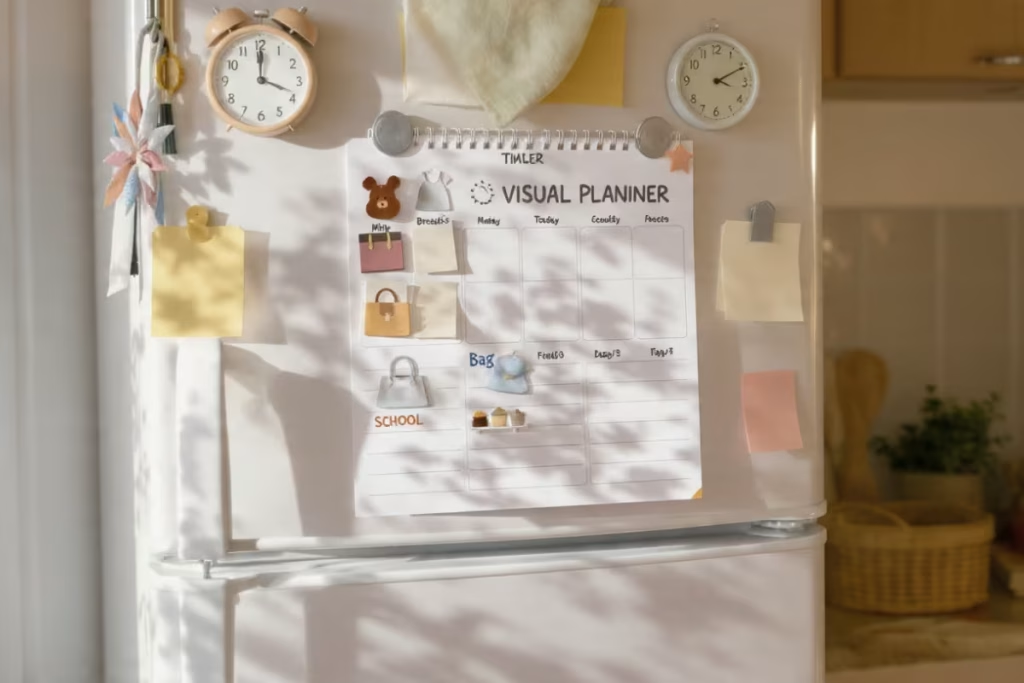
Elementary kids need help breaking big tasks into smaller steps. They need visual schedules and timers. They need us to teach them how to handle frustration and disappointment because those skills aren’t automatic. They need way more sleep than they think they do because their growing brains require it.
The connection between development and discipline
Understanding development completely changed how I handle challenging behaviors. When my kids act out now I ask myself what skill they’re missing instead of what punishment they deserve.
A toddler who hits needs help learning to express frustration with words and actions that don’t hurt others. Punishing them for hitting doesn’t teach that skill. Showing them gentle touches, giving them words to use and redirecting their energy does.
A preschooler who refuses to clean up their toys might need the task broken down differently. Instead of “clean your room” try “put the blocks in this bin” then “now put the cars on the shelf”. Their brain can handle one concrete step at a time but gets overwhelmed by big vague instructions.
A school-age child who “forgets” their homework might need systems to help their developing executive function. A homework basket by the door, a visual checklist or a phone reminder works better than lectures about responsibility.
This developmental approach fits perfectly within positive parenting strategies that focus on teaching rather than punishing. When you align your discipline with your child’s actual capabilities you get better results with less conflict.
Practical tips for each stage
Start where your child is developmentally not where you wish they were. For toddlers this means childproofing your space so you can say yes more often than no. It means having predictable routines because their brains crave consistency.
Preschoolers benefit from advance warnings before transitions. Set a timer for five minutes before it’s time to leave the park. Give them a job to do so they feel important. Let them have some power over small decisions like which shirt to wear or whether to have apples or bananas.
Elementary kids need us to teach social skills explicitly. Role-play how to join a game at recess. Practice what to say when someone is mean. Talk through friendship problems without immediately solving them.
Every age benefits from connection before correction. A child who feels understood and supported is much more likely to cooperate than one who feels criticized and controlled.
Moving forward with confidence
Learning about child development gave me so much more patience and creativity as a parent. I stopped seeing my kids as deliberately difficult and started seeing them as developing humans who need guidance.
You don’t need to be perfect at this. I still lose my patience sometimes. I still expect too much on hard days. But having this framework helps me get back on track faster and repair more effectively when I mess up.
The beautiful thing about understanding development is that it helps you pick your battles wisely. Some behaviors really do need intervention. Others will naturally improve as your child’s brain matures. Knowing the difference saves everyone a lot of stress.
If you want more specific strategies for handling everyday behavioral challenges check out our practical solutions for common childhood behavioral problems. You’ll find concrete examples of how to apply these developmental principles to real situations like morning routines, sibling fights and bedtime battles.