
How to balance structure and freedom in your parenting
The morning my daughter was born a nurse handed her to me and said “congratulations, now you get to figure out how to raise her.” No instruction manual. No clear roadmap. Just this tiny human who needed me to somehow know what I was doing.
Eight years later I’m still figuring it out. But I’ve learned that the balance between giving guidance and allowing independence isn’t some mysterious art. It’s a skill you can develop with practice and intentional choices.
The parents who seem to have it together aren’t doing anything magical. They’ve just learned when to step in and when to step back. They know which battles matter and which ones don’t. Most importantly they understand that the goal isn’t to control their children but to teach them how to control themselves.
Starting with your foundation
Before you can balance anything you need to know what you’re balancing. Sit down and identify your family’s core values. What matters most to you? Safety definitely tops the list for everyone. But what comes after that? Respect? Honesty? Education? Faith? Independence?
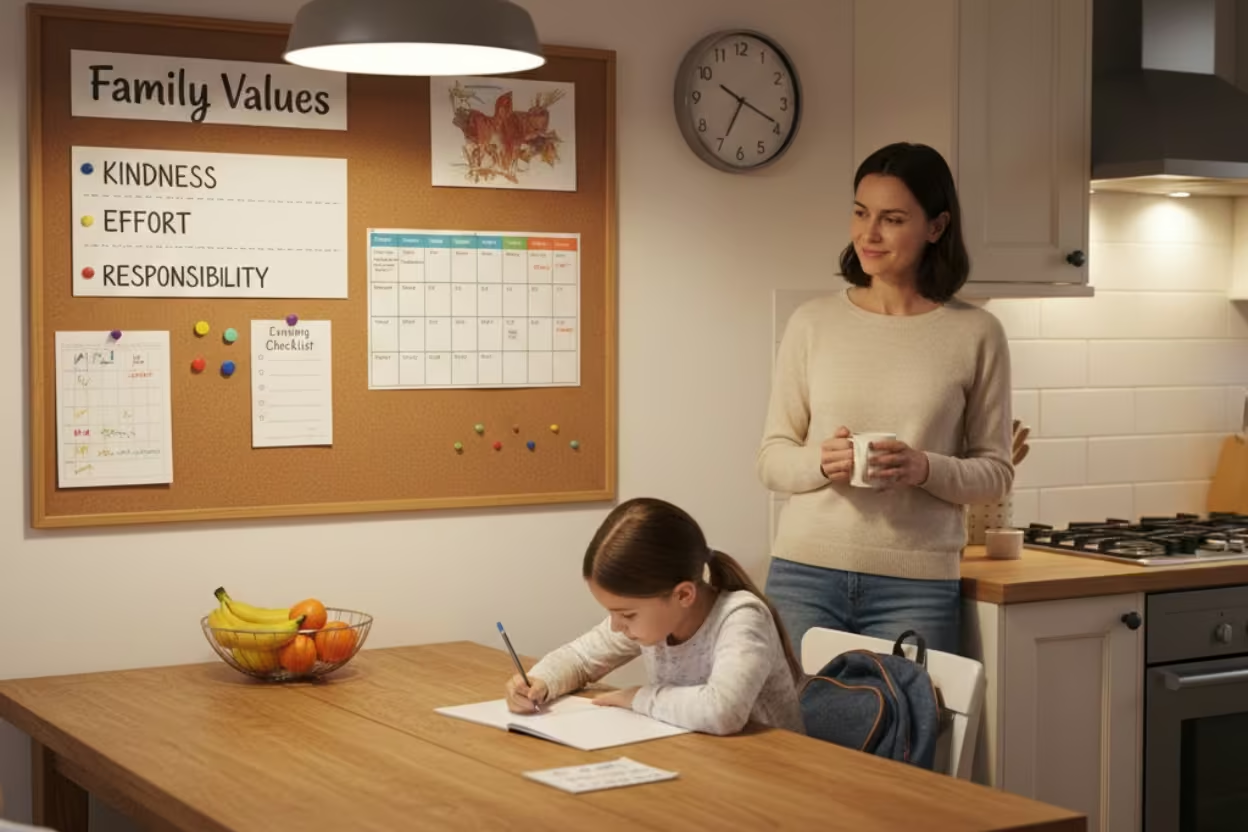
My list includes kindness, effort and responsibility. Those three values guide almost every parenting decision I make. When my daughter wants something I ask myself if saying yes or no supports these values. If the answer doesn’t clearly connect to one of them the decision probably doesn’t matter that much.
Write down your non-negotiables. These are the rules that don’t bend regardless of circumstances. In our house physical safety rules are non-negotiable. So is treating people with basic respect. School attendance falls in that category too.
Everything else has room for flexibility. Clothing choices, food preferences, hobby interests and friendship decisions don’t threaten our core values so my daughter gets significant freedom in those areas.
Age-appropriate applications
A three-year-old and a thirteen-year-old need vastly different amounts of structure and freedom. Getting this balance right means understanding child development stages and adjusting your approach accordingly.
Toddlers and preschoolers need lots of structure with small pockets of choice. “Do you want to wear the red shirt or the blue one?” gives autonomy within boundaries you’ve set. They’re learning cause and effect so consequences need to be immediate and concrete. You threw your food so mealtime is over
Elementary-age children can handle more explanation and slightly delayed consequences. They’re developing reasoning skills so you can discuss why rules exist. “We don’t hit because it hurts people and damages relationships” makes sense to a seven-year-old in ways it doesn’t to a three-year-old.
This is when you start teaching decision-making skills actively. Let them choose their after-school activities from acceptable options. Allow them to decide how to spend their allowance. Step back and let them experience natural consequences when safe to do so.
Middle schoolers need increasing autonomy with maintained connection. They’re testing independence and figuring out who they are separate from you. Your role shifts more toward consulting than directing. You’re still setting boundaries around safety and values but negotiating more in other areas.
Teenagers require the most delicate balance. They need significant freedom to prepare for adulthood while still needing your guidance and protection. You’re gradually releasing control while staying close enough to catch them if they fall.
My approach with my daughter now involves lots of questions. “What do you think would happen if you did that?” “How will you handle it if things don’t go as planned?” I’m teaching her to think through decisions rather than making all decisions for her.
Daily scenarios and solutions
Morning routines create some of the biggest power struggles. You need your child ready for school by a certain time but fighting every morning exhausts everyone. The balance comes from giving them control over the how while you maintain control over the what and when.
Set the expectation clearly “You need to be dressed, fed and ready to leave by 7:45.” Then step back and let them figure out how to make that happen. Natural consequences teach better than nagging. If they’re not ready you still leave and they face whatever consequences the school has for being late.
This took me weeks to implement successfully. I had to stop reminding and rescuing. The first time my daughter wasn’t ready I felt terrible leaving anyway. But she learned and our mornings became peaceful once she realized I meant what I said.
Homework battles respond well to structured freedom too. “Homework needs to be finished before screen time” sets the boundary. When they do it and how they approach it becomes their choice. You’re available to help if asked but you’re not managing the process.
Screen time limits need clear boundaries with some flexibility built in. Maybe the rule is one hour on school nights but they can bank unused time for weekends. Or they get to choose which hour. The limit stays but how they use it becomes their decision.
Bedtime routines evolve with age. Young children need you to manage the whole process. Older kids can manage themselves with a set time they need to be in bed. Teenagers might negotiate slightly later times on weekends while maintaining school night boundaries.
Teaching decision-making skills

Children don’t develop good judgment by never making decisions. They learn through practice including making mistakes. Your job is creating safe opportunities for them to choose and experience outcomes.
Start small with low-stakes decisions. A five-year-old picking their snack learns decision-making without serious consequences. A ten-year-old choosing between soccer and art class learns about commitment and priorities.
Let them experience regret in small doses. Your daughter chose the pink backpack and now doesn’t like it ? She keeps it for the year and learns to think more carefully next time, These lessons stick better than any lecture.
Walk them through bigger decisions using questions. “What are your options here?” “What might happen with each choice?” “What matters most to you in this situation?” You’re teaching a process they’ll use their whole life.
Resist the urge to rescue them from poor choices when the stakes are low. Your son forgot to study for his spelling test and got a bad grade? That’s actually a gift. He learned something important and the consequence was minor compared to what happens if he doesn’t learn this lesson until college.
Handling pushback and testing
Every child tests boundaries. It’s their job developmentally and it’s actually healthy. They’re learning where the edges are and whether you mean what you say. Expect testing and don’t take it personally.
Stay calm when they push back. “I know you’re upset that I said no. The answer is still no.” You can acknowledge feelings while maintaining boundaries. This models emotional regulation better than yelling or giving in.
Follow through consistently. If you say there’s a consequence you must deliver it every time. Otherwise you teach them that your words don’t mean anything and they just need to push harder next time.
Pick your battles carefully though. Not every disagreement needs to become a war. Ask yourself if this issue connects to your core values or if you’re just being controlling. Sometimes the best response is “you know what, that’s actually fine.”
I learned this when my daughter wanted to dye a streak of her hair blue. My initial reaction was no because it seemed too extreme. Then I asked myself why I was saying no. It didn’t violate any of our values. It was temporary. I was being controlling for no good reason so I said yes. She loved it and our relationship strengthened because I showed flexibility where it didn’t matter.
Creating systems that support balance
Routines provide structure that frees up mental energy for everyone. When certain things happen the same way every time you eliminate daily negotiations over basics.
We have a morning routine, an after-school routine and a bedtime routine. Within those routines my daughter has choices but the basic flow stays consistent. This predictability reduces stress and conflict.
Visual charts help younger children manage their responsibilities independently. A checklist of morning tasks lets them track their own progress without you nagging. They’re developing self-management skills while you maintain the boundary that everything gets done.
Family meetings create space for collaborative problem-solving. Once a week we talk about what’s working and what isn’t. My daughter brings concerns and so do I. We brainstorm solutions together which gives her voice while keeping me in the leadership role.
Natural consequences systems teach responsibility effectively. Dirty clothes not in the hamper don’t get washed. Forgotten library books result in late fees paid from allowance. Toys left out get put away for a week. The rules are clear and you follow through without lectures or anger.
When your approach needs adjustment
What worked last month might not work now. Children’s developmental stages shift and family circumstances change. Stay flexible and willing to modify your strategies.
Notice patterns of constant conflict. If you’re fighting over the same things repeatedly something needs to change. Maybe the expectation is unreasonable. Maybe you’re not being consistent. Maybe your child needs more input in the rule.
My daughter and I were battling constantly over bedtime until I realized she’s genuinely not tired at 8pm anymore. We negotiated a later time that still ensures adequate sleep. The fighting stopped because I adjusted to her developmental stage.
Get input from your child about what’s working. “I’ve noticed we’re fighting a lot about homework. What would help?” Sometimes they have insights you’ve missed. Collaborating on solutions increases buy-in.
Don’t be afraid to admit when you’re wrong. “I’ve been too controlling about your friend choices. As long as they’re kind and respectful you can decide who you spend time with.” Adjusting course models humility and teaches that mistakes can be corrected.
Building long-term success
The balance you create today shapes your child’s future. You’re not just managing current behavior. You’re teaching life skills they’ll use forever.
Children who grow up with the right mix of guidance and independence become adults who can think critically, make sound decisions and regulate their own behavior. They don’t need someone else to tell them what to do because they’ve developed internal motivation and judgment.
The relationship you build through balanced parenting lasts into adulthood. Your grown child will actually want to spend time with you because respect and trust flow both ways. They’ll come to you for advice because they know you’ll listen and guide without trying to control.
For parents struggling with specific challenges when implementing these strategies or dealing with pushback from children or co-parents, understanding common obstacles and their solutions provides the troubleshooting support needed to stay consistent through difficult transitions.